

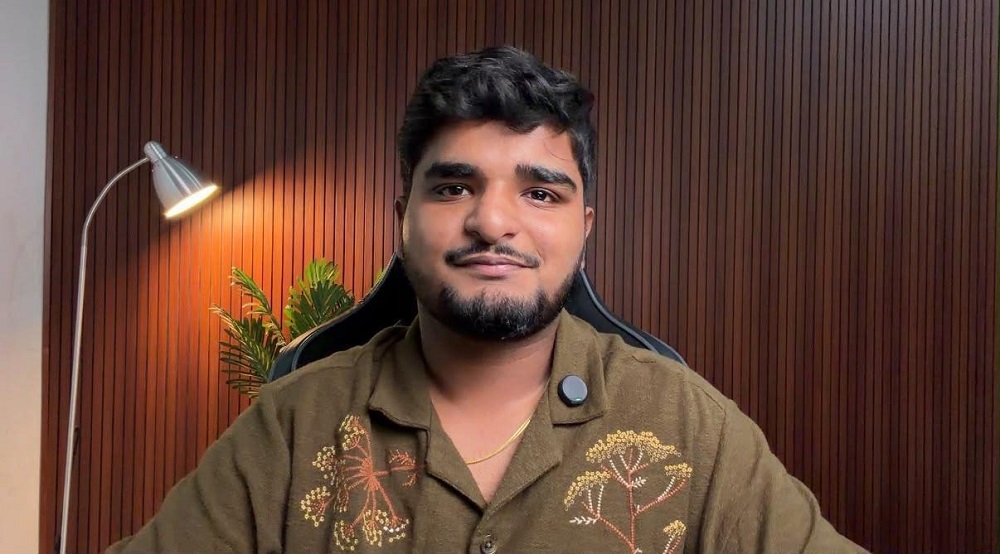
By Rudra Pratap Singh, Founder, New Money Matrix
Faceless YouTube channels in India are increasingly built with artificial intelligence handling research, scripting, narration and editing, but platform rules and audience behaviour are making originality the factor separating channels that earn from those that do not, according to Rudra Pratap Singh, founder of New Money Matrix, a Bhopal-based education company specialising in the format.
Faceless channels publish without the creator appearing on camera, using narration laid over licensed footage, images, screen recordings or animation. The format has grown among Indian working professionals who want to publish without a public profile, and faster still since AI reduced the production skills it had once required.
Where AI is used in the workflow
Creators now use AI at nearly every production stage. Language models generate topic ideas and structure research, and produce first-draft scripts, often after being shown transcripts of high-performing videos so the output follows a proven structure. Text-to-speech tools generate narration in a range of voices. Image models produce visuals and thumbnail options in seconds. Editing software applies automated captions, rough cuts and colour correction without manual input.
The effect is a sharp reduction in production time. Work that previously required writing, presenting and editing skills, and typically took a small team several days, can now be completed by one person in an afternoon.
“AI removed the skill barrier, and that is genuinely significant for anyone in India trying to build something alongside a full-time job,” Singh said. “What it did not remove is the work of deciding. Choosing the subject, judging whether a thumbnail earns a click, knowing when a draft is wrong. Those are still human decisions, and they determine most of the outcome.”
What YouTube permits
YouTube’s monetisation policies do not prohibit AI. The company’s published guidance explicitly names permitted uses, including employing AI to edit video scripts, to generate original background visuals, and to visualise a character and narrative the creator invented.
The condition attached is that the finished video must demonstrate the creator’s own creative vision and provide educational or entertainment value. Automated tools and templates are acceptable in themselves. Output assembled without human judgment behind it is not, regardless of the software involved.
Separately, YouTube requires creators to disclose altered or synthetic content only when it is realistic enough that a viewer could mistake it for a real person, place or event. Disclosure is not required for clearly unrealistic content, animation, special effects, or generative AI used as production assistance, which means AI narration and stylised visuals do not by themselves trigger the requirement.
The distinction that matters
In July 2025 YouTube renamed its repetitious content policy to inauthentic content, describing the change as a clarification of existing rules. The policy now identifies three categories that cannot earn advertising revenue.
The first covers generic, repetitive or template-based content in which each video closely resembles the last, including AI-generated videos built on unoriginal templates that give the impression of mass production without the creator’s own insight. The second covers deliberately distressing or emotionally manipulative content produced to attract views. The third covers AI personas presented as human experts offering guidance on sensitive subjects including health, finance, law and politics.
“The policy is not aimed at the tools, it is aimed at the absence of a person,” Singh said. “A channel where a process runs and output appears is the thing being removed from monetisation. A channel where someone chose the topic, wrote the argument and rejected three thumbnails before picking one is a different object entirely, even if both used the same software.”
Reused content and copyright are separate risks
Faceless channels frequently rely on third-party footage, images and clips, creating two distinct exposures that creators often conflate.
Copyright governs whether material may be used at all. Material published online is not automatically available for reuse, and a creator needs ownership of the asset, explicit permission, a valid licence or another defensible legal basis before including it.
YouTube’s reused content policy operates separately. The company states that the policy is not based on copyright, permission or fair use, and that it applies even where the original creator has given consent. It assesses whether significant original commentary, substantive modification or educational value has been added, and applies to a channel as a whole rather than to individual videos. Content consisting exclusively of readings of material the creator did not write, such as text from websites or news feeds, is listed as ineligible for monetisation.
Permitted examples include clips used for critical review, reaction videos containing commentary, and edited footage where the creator has added a storyline. Reviewers examine a channel’s main theme, its most viewed and newest videos, those carrying the largest share of watch time, the metadata and the channel description.
Enforcement ranges from withheld or adjusted earnings and payment delays of up to 90 days through to suspension from the Partner Programme and channel termination.
Retention remains a human problem
Audience retention has not been simplified by automation. Industry practice holds that a video’s opening seconds determine whether viewers continue watching, and that retention through the middle of a video depends on pacing and narrative tension rather than on production quality or editing polish.
“Most videos do not fail at the opening, they fail ninety seconds in, when the tension flattens and nothing new has been promised,” Singh said. “No tool will tell you that has happened. You find it by opening the retention graph and reading it, which is the part people avoid.”
Monetization requirements are rising
Creators seeking advertising and YouTube Premium revenue currently need 1,000 subscribers plus either 4,000 qualified public watch hours in the preceding twelve months or 10 million qualified Shorts views in 90 days.
From 1 February 2027, those thresholds double for new applicants to 8,000 qualified watch hours or 20 million Shorts views. The subscriber requirement is unchanged and channels already in the program are unaffected, according to YouTube’s guidance.
A separate and earlier tier allows creators with 500 subscribers to access fan funding features including channel memberships and Super Thanks, subject to upload frequency and watch-time conditions. That tier does not include advertising revenue. Additional requirements, including tax documentation, affect what reaches an Indian creator’s account and are set out in this guide to YouTube monetisation in India.
Timelines and attrition
The New Money Matrix said reaching monetisation typically takes one to six months where execution is strong and the subject viable, and longer in competitive categories. Building substantial monthly revenue is generally measured in years, and a clear majority of the creators who begin do not continue.
The company said startup costs are minimal, requiring a computer and an internet connection, with free tools available for editing, narration, and thumbnail design. It added that low startup cost should not be read as an indication of speed and that the two are frequently confused by entrants.
“The barrier moved rather than disappeared,” Rudy said. “It used to be a skill barrier and AI removed it. What replaced it is a judgment and patience barrier, and that one is getting higher, because everyone who arrived because production became easy is now competing on the one thing that no longer distinguishes anybody.”
